
|
General Recipes
Sweet/Desert Tapas Indian/Thai Food |
Recipes /
Hot Serrano Peppers Preserved in OilDeveloped from an original recipe by Shruti Mehta. Whatever we were supposed to be cooking, it was pretty easy to side-track Shruti in to talking about something else. I would get home with the margins of my hand-outs filled with scrawled recipes for other dishes. At the bottom of the hand-out for saffron rice, I have "Chili Pickle — works well with Serranos", a short list of ingredients and some basic instructions. By pure coincidence, Jean, who gardens, was experimenting with a variety of Serrano Peppers called "Hot Rod", that has a reputation for considerable heat. I messed about with proportions and ended up with what appears here. I didn't write down was what to do with this "pickle" when it was made, so I put it on bread and melted cheese over it. I also cook with it instead of green chilis when they are out of season. Everyone I give some to discovers new uses. I ignorantly changed the name because I did not know that the term pickling includes the preservation of food in vegetable oil.
Getting Hold of the PeppersBad news — you're not going to be able to pick up "Hot Rod" Serranos in the grocery department of Walmart. In fact, you're probably going to have to grow them yourself. At first (2015), we bought the seeds from Johnny's Selected Seeds, but during the COVID pandemic they became unavailable. Eventually, a substitute was offered, but the peppers had nothing like the heat of "Hot Rod" and we looked elsewhere. in 2023, we found real "Hot Rod" Serranos at Reimer Seeds. Serranos are easy enough to grow anywhere in the US. In cooler areas, start them inside and plant them out when it is warm enough. In the Boston area, this is around Memorial Day. We begin harvesting in early August and continue through to the end of October. Yield is 20 to 40 peppers per plant. Although we are plagued by chipmunks, rabbits, squirrels and all manner of flying and crawling bugs, nothing attacks our Serranos. If you want to cook with the peppers rather than make this pickle, you can just blanch them as described below and then freeze them. They lose a little bit of heat, but less than they will lose during cooking. If you're into bravado and want to eat a "Hot Rod" Serrano raw, start with a very small piece and have milk, yogurt, etc. on hand. 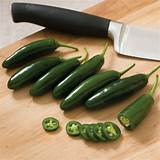 Once You've Got the Peppers
Using Other PeppersIf you don't want to grow your own "Hot Rod" peppers and you can't entice someone else into doing it for you, you're going to have to use something else. The only thing I have to say about this is that the quantities of all ingredients have been chosen based on the heat of "Hot Rod" Serranos. For example, if you use store-bought Serranos, they will be much, much less hot and the spices (mustard seed and hing) may be overpowering. Just make sensible adjustments and you will find a new balance. |